Befriend Your Emotions
You've worked on your emotions enough. In three weeks, start working with them.
You've probably done a lot: meditation, therapy, books, courses, maybe a retreat. If there's something in you that still hasn't moved, Befriend Your Emotions is a three-week live course to stop fighting the emotions underneath, and start understanding them.
Starts
Nov 19
3 weeks
8 lessons
7 live sessions

The 3-minute video
"For years I have been seeking detailed meditation guidance and ideas for how to experience healthy emotions – I have been asking therapists and meditation teachers about this stuff for maybe 15 years, and now I am finally finding it."

The one thing that hasn't moved
With all the work you've done on yourself, and everything it's already changed for you, I'm going to guess there's still one thing in you that hasn't moved. Maybe an emotion that keeps coming back. A reaction you can't seem to stop. A pattern you've understood from every possible angle.
If you're nodding, you're in the right place. It's what unites most of my best students, and it's possible to change it.
So why hasn't it changed?
The tools you have are good. Meditation, therapy, breathwork, journaling, yoga, the books, the retreats: they're powerful, and they can help a lot.
But look at what we usually use them for. An emotion shows up, and we point our tools at it to make it stop. Calm it down. Breathe it out. Reframe it. Release it. Understand it so well that it should go away.
Even kindness gets recruited. "Be gentle with yourself" turns into one more thing to get right, and when the emotion doesn't leave, you've failed at that too.
That's working on your emotions. And the emotion feels it. Fought, it pushes back. Ignored, it gets louder. (Anyone who's had a toddler, or been one, knows how this goes.)
I know this because I was there myself. At one point on my path I was using everything I knew and still feeling stuck, so I decided to find out why. And here's the blunt truth from what I discovered: I was using my best tools to avoid an emotion. A very advanced, very well-disguised kind of avoidance, but still avoidance.
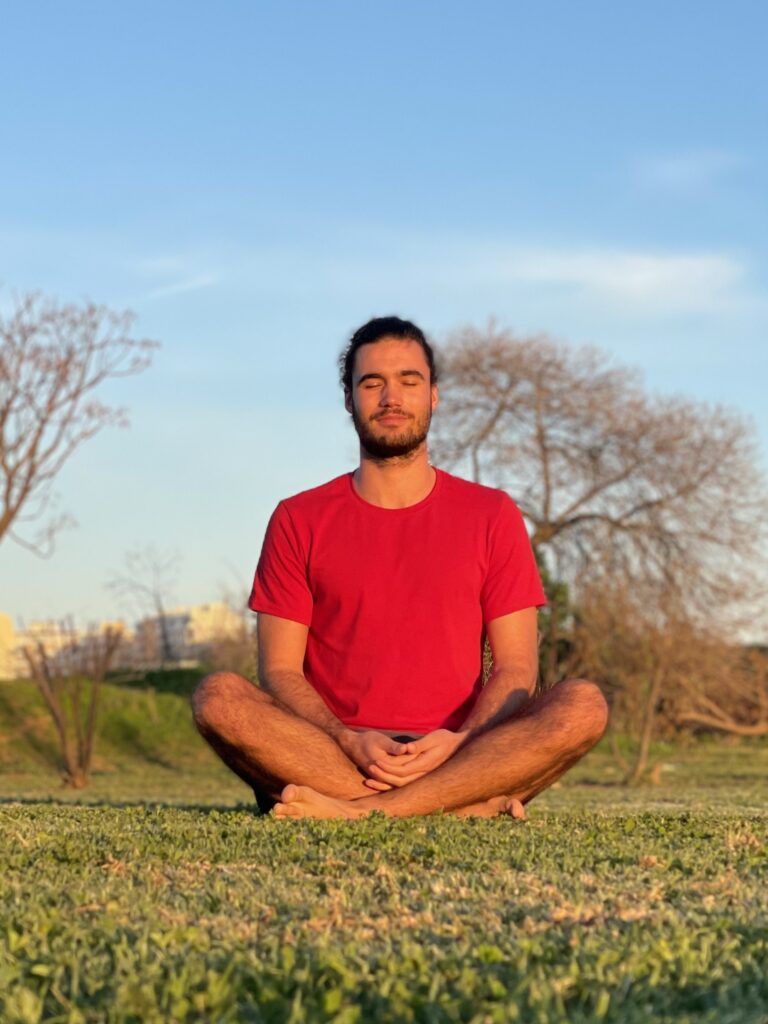
What keeps a pattern in place is the fight against it.
The good news is, you don't need new tools. You need a different relationship with the emotions you've been pointing them at.
| Working on your emotions | Working with your emotions |
|---|---|
| "How do I make this stop?" | "What are you trying to tell me?" |
| The emotion is the problem | The fight with it is the problem |
| Your tools are aimed at it | Your tools work alongside it |
| The pattern holds on | The pattern has room to change |
What if you befriended it instead?
That might sound strange. Maybe even a little naive, if the emotion in question has been making your life hard for years. Makes sense.
But what if, instead of seeing your emotions as obstacles or enemies, you approached them with wonder and a real wish to understand? What if you could even become friends with them, starting with the one you like least?
It's possible. This is what it sounds like from the other side:
"It feels very good. Never thought I would befriend and listen to my emotions like that."

"Safety. Safe to be in the unknown. Meeting the deepest difficult emotions with a welcome, love, compassion."

Why befriending comes first
Every piece of inner work you'll ever do, you do through your relationship with your emotions. If that relationship is a struggle, the work is a struggle. If it's one of understanding, the work starts to flow.
So that's where we begin. Befriending comes first: before healing, before changing anything, before helping your emotions find better ways to help you. Once the fight stops, everything you already know has room to work.
This is foundational, which is different from basic. In my experience, the people who've done the most inner work often get the most from it, because they have the most to put to use.
Introducing
Befriend Your Emotions
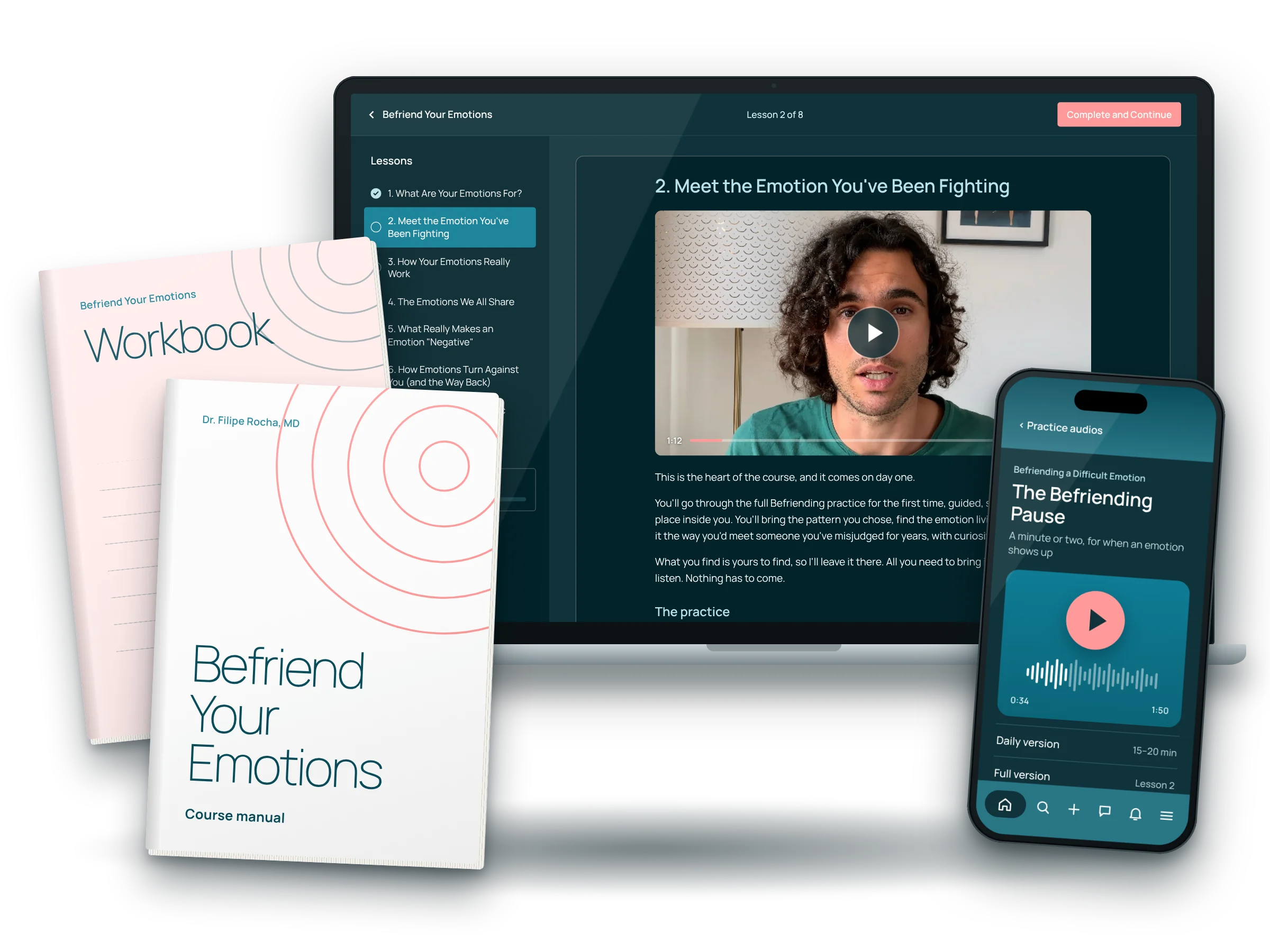
Three weeks, eight lessons, one practice, and a group of people doing the same work alongside you. Everything is experiential: you discover each idea in your own experience before I teach it. I guide, you discover.
By the end, you'll have:
- The emotion inside the thing that hasn't moved, met and heard: what it cares about, and how it's been trying to help you.
- The end of the fight that's been keeping it stuck, along with everything that fight has been costing you: the constant effort, the tension, the feeling of being at war with yourself.
- Your Inner Critic on your side.
- A daily practice, plus the Befriending Pause: a minute or two for the moment an emotion shows up in real life.
- A second emotion already befriended, so you know the first one wasn't a fluke.
The first shift is designed to happen on day one. In lesson 2 you'll go through the full practice for the first time, and the only thing it asks of you is a willingness to listen. Nothing has to come. That willingness is where the change begins.
And because how you meet your own emotions shows up everywhere, you'll probably notice it in your relationships too: at home, at work, in the conversation you've been putting off.
- 8experiential lessons
- 1core practice, in 3 versions
- 7live sessions
- Manual and workbook, yours to keep
- A community doing the work with you
Is this for you?
This is for you if:
- You've been on your own path for years (meditation, therapy, courses, retreats, whatever it's been), and there's still one thing in you that hasn't moved.
- You know something about emotions, and you'd love what you know to work when a hard one is actually here.
- You're a little tired of fighting yourself, and curious what happens if you stop.
- You'd rather feel the change than collect another theory about it.
- You might work with other people's emotions (many in our community do), or you might not. Both are welcome here.
This isn't for you if:
- You want your emotions gone. This course will ask you to get curious about them first, and that can feel strange at the start.
- You want to understand your emotions without ever feeling them. Understanding is a good instinct, and we do a lot of it here. Used instead of feeling, it's one of the most sophisticated ways to avoid.
- You want the change without the practice. This is experiential. There's no version you can complete by just watching.
- You're after one more technique for the collection. The practice you'll get works underneath every technique, on your relationship with your emotions. If what you want is a new tool to point at the problem, this will probably frustrate you.
What we ask of each other
We make a few agreements, because they're what make the room safe enough for real work:
- You're committed to the work for the three weeks.
- You come open, and willing to face yourself.
- You support the people doing it alongside you.
- You take responsibility for your own learning and enjoyment.
- You know what you're bringing: the one thing you'd most like to change.
How the three weeks work
Every Tuesday and Friday, two new lessons open. They're pre-recorded, and they're full of things to do: experiments, practices and reflections that you work through as you go. Doing that work is where the change happens.
Do the work your way
Each time new lessons open, you choose how to go through them:
Live Work Sessions. Go through the lessons with the group and do the work together, live. Recommended: this work lands deeper and it's a lot more fun in safe community.
With a course partner. Go through them with a partner from the course, in sessions you schedule at your own time. You can also bring your own partner, like a colleague, friend, or spouse.
Fully self-paced. Prefer your own rhythm? Go through the lessons on your own, whenever suits you.
You can mix them, too. Join the sessions you can, and catch up on your own when life gets busy.
Three additional live calls
At the start: Welcome call, with me.
Meet me and the group, get set up, and find a course partner if you'd like one.
At the end: Implementation Call.
This is where it all comes together. In pairs, you do the work together, out loud. Many of our emotional wounds were formed in relationship, often through disconnection, so doing this work in connection is their direct antidote, and the impact goes deeper. And hearing other people's emotions makes it much easier to believe that every emotion can be on your side, yours included.

Bonus: Live group coaching with me
The last session belongs to coaching. Outside my private sessions, it's a rare chance to watch me coach live, and maybe be coached yourself. Watching someone else go through it is one of the most powerful ways to learn: you see the whole process unfold in front of you, and it often moves something in you too. We'll finish with a short closing to celebrate what's changed.
Your three weeks at a glance
Live sessions start at 7pm CET
- Thu Nov 19Welcome call, with me7pm CET
- Fri Nov 20Lessons 1 and 2, including your first full practice · Live Work Session (optional)7pm CET
- Tue Nov 24Lessons 3 and 4 · Live Work Session (optional)7pm CET
- Fri Nov 27Lessons 5 and 6 · Live Work Session (optional)7pm CET
- Tue Dec 1Lessons 7 and 8 · Live Work Session (optional)7pm CET
- Fri Dec 4Implementation Call7pm CET
- Sat–Sun Dec 5–6Catch-up weekend
- Tue Dec 8Live group coaching with me, and a short closing7pm CET
One guided practice is the heart of the three weeks
It's called Befriending a Difficult Emotion:
- You go through the full version on day 1, in lesson 2.
- The daily version takes 15 to 20 minutes, daily or every other day.
- The Befriending Pause takes a minute or two, for when an emotion shows up in real life.
Each lesson adds a new lens, so the same practice keeps going deeper.
About 4 hours a week. That covers the lessons, a short daily practice, and the live sessions you choose to join.
Yours to keep. The manual, workbook and practice audios are yours to download and keep. The lessons and the call recordings stay online for at least a year.
The eight lessons
What shifts:"I want this gone""I want to understand it"
You've probably spent years trying to change how you feel. So before we do anything with the emotion you'd most like gone, let's ask a stranger question: what are your emotions for, anyway?
We'll start with a short experiment, eyes closed, a few minutes, and you'll find the answer in your own experience. That's how this whole course works: I guide, you discover.
Then you'll choose the pattern in you that you'd most like to change, and the one you most wish you had, and bring both along into everything that follows.
What shifts:"I want to win this fight""I want to hear what it has to say"
This is the heart of the course, and it comes on day one.
You'll go through the full Befriending practice for the first time, guided, starting from a safe place inside you. You'll bring the pattern you chose, find the emotion living inside it, and meet it the way you'd meet someone you've misjudged for years, with curiosity and a little wonder.
What you find is yours to find, so I'll leave it there. All you need to bring is a willingness to listen. Nothing has to come.
So, maybe for the first time in your life, it's time to Meet the Emotion You've Been Fighting.
What shifts:"It just happens to me""I can see why it comes"
Why does the same comment roll off you one day and ruin your afternoon the next?
In this lesson you'll map your emotion from beginning to end: what set it off, what it changed in your body and mind, and what it pushed you to do. Then you'll compare the things that trigger you with similar things that don't, and see the pattern underneath for yourself. (A hint: the event is rarely the whole story.)
You'll also start a short Emotion Diary that turns ordinary days into practice material.
What shifts:"Something's wrong with me""This is human"
Every person on this planet feels fear, anger, sadness and joy, and a few more besides.
In this lesson you'll meet the small family of emotions we all share, each with its own job. (Fear's job, for instance, is keeping you away from danger, which is a pretty respectable job.) You'll find which family your emotion belongs to, and check whether its job matches what it showed you in the practice.
Then comes a small sorting exercise that might change how you see the whole thing. I won't spoil it.
What shifts:"I don't want the negative emotions""Not wanting an emotion makes it negative"
Most of us run from the emotions we call negative and chase the ones we call positive. And somehow we end up with more of the first and less of the second. Ever noticed that?
In this lesson you'll put the emotion you've been running from and the one you've been chasing side by side, and feel what you've been doing with both.
Then we'll take apart the idea that some emotions are good and some are bad, using nothing but your own experience. It's one of my favorite lessons to teach.
What shifts:"Self-love is nice""Self-love makes change possible and easy"
If your emotions are on your side, how do they end up running – and ruining – the show?
Short answer: they're still trying to help. But somewhere along the way, often very early, an emotion can get stuck in a strategy that hurts you.
In this lesson you'll see how that happened with yours. You'll watch, in your own experience, how the fight against it hardens the strategy even more. And then you'll feel the way back.
This is where befriending stops being a nice idea and becomes the thing that makes change possible.
What shifts:"My critic is against me" OR "My critic is right""It's been trying to help, the only way it learned – and there is a better way"
You know the voice. The one that's harder on you than you'd ever be on anyone you love. Most advice says to silence it, argue with it, or rise above it. (How has that been going?)
In this lesson you'll write down exactly what your critic says, and notice what happens when you believe it and when you fight it.
Then you'll do something most people never try: befriend it. You'll find the good intention behind all that criticism, let both of you feel how much the old way has been hurting, and start rebuilding a friendship that actually helps.
It's time to Befriend Your Inner Critic.
What shifts:"It's a practice I do""It's how I relate to my emotions in life"
One emotion befriended is a beautiful thing. Every emotion befriended is a different way of living.
In the last lesson you'll learn five simple questions you can bring to any emotion, anywhere, and take a second emotion through them. You'll also look again at the thing you've been chasing, and what you might really be reaching for underneath.
Then we make it part of your days: in the practice, in the moment, and in conversation with the people you love. This is Befriending, Every Day.
What the three weeks feel like
For many students, these three weeks are where things finally start to move. I'll be honest with you, though: the first week is often the hardest, and that's usually a good sign. Old patterns don't love being looked at, and some of them make a bit of noise before they soften. Here's how Owen described his first three weeks:
"The first week I have to confess I was triggered. Am I good enough? … The second week I was again finding connecting to myself and creating my safe place difficult. Third week … I decided to listen to the meditation, and wow did I connect. I cried and cried. I cried for joy, I cried sadness. I cried because for the first time I went through the emotions, felt them totally. I just let go, and I was there completely. Filipe, I love you. It's happening. I'm beginning to understand my emotions."

And Meri, after the Implementation Call:
"It was especially gratifying to soothe my upset emotion, just like I'd soothe a toddler. My emotion cried, I almost cried with my emotion as I was hugging it and validating, and then we smiled and started laughing like best friends."
In their words
"Thank you for putting everything together and making it easier to process. It's like having a map."

"I practice meditation every day, and it's been easier with what you teach us in the course."

"I went from being completely out of touch with my feelings, to being able to listen to my emotions and appreciate their value."
"I love how this course is connecting all the dots."

"I used to feel bad about having needs and feelings. Now, I'm able to communicate them better without a bad conscience."

"I'm able to recognize all emotions, especially sadness as productive assets and embrace them."

"This course is a hands-on experience unlike talk therapy. It moves beyond cognitive thinking to action and personal empowerment."

"I've been waiting for decades for a way to regulate/be in touch with my emotions and just had no idea how to start."

"A better, more profound relationship with myself."
"You gave me a depth of understanding that I believe would otherwise have required several different courses."

"I can recommend the work with Filipe if you are ready for a deep personal development and are looking for an empathic, humorous and structured teacher."

"It wasn't addressed on an emotions level but on the mindset level, so I was constantly overriding the emotions, dysregulating myself even more."


Who's guiding you
Hi, I'm Filipe
You've heard of walking your talk. I like to talk my walk: everything I'll teach you in these three weeks, I found first in my own experience. So let me tell you where it comes from.
At seventeen, something opened up in me. My life was good, with friends and no real complaints. Then, suddenly and without warning, my awareness expanded, and it pulled me inward. Something had opened, and I wanted to know what it was.
So I started meditating on my own, with no teacher and no training. For years I explored everything I'd never looked at in myself: my fears, my shadows, the wounds under my patterns.
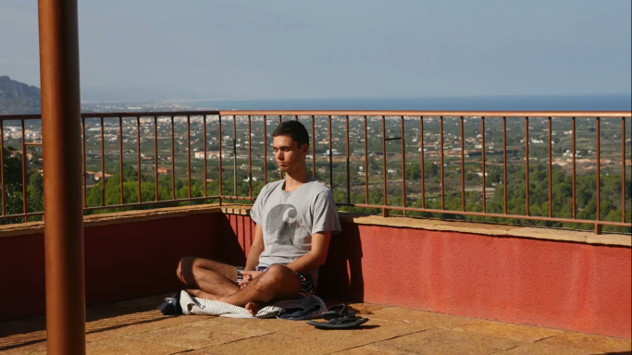
That work took my old life – and my world – apart. My beliefs, my identity, my sense of humor, my drive, and most of the people closest to me went with it. If you've been on this path for a while, you might know the name for that stretch: the dark night of the soul.
But through it, I gained profound understanding of how our mind and emotions work, what makes them unbalanced, and how to transform them.
And I experience the results in my life every day:
- When difficult things happen, I can feel my emotions all the way through, and they move and transform.
- My friends, family and students often ask how I stay so calm when hard things happen.
- I can feel joy when nothing "good" is happening at all.
- And I have a much greater capacity to love and be loved.
I found my way through. But I'd have loved to have what I didn't: teachings that made sense of what I was going through, someone who understood it to guide me, and people walking the same path beside me.
The whole journey would have been easier, safer, more effective, and above all, more enjoyable. I'd have avoided some of the pitfalls, and when I did fall into one (and I fell into a few), someone would have been there to help me out.
That's what I've built here: teachings that make sense of it, guidance from someone who's walked it, and people doing the same work, together. It's what I wish I'd had, and I'd love to offer it to you.
I'm still walking my own path, like you. And I love helping others walk theirs. I also turned out to be good at it. Seeing someone make friends with an emotion they've fought for years fills my heart every time.
So why should you work with me?
You probably shouldn't. Run now before it's too late…
Now seriously, if you're into a healthy mix of soul-filling depth, mind-blowing clarity, and silly humor, you've probably found your place.
I invite you to come and try. If we're a match, we're going to have an awesome time. If not, and some people are not, you'll have the opportunity to leave with my best wishes and no hard feelings – and hopefully some new learnings too.
My background
What came out of my journey was a foundation.
From there, I've studied and practiced more than 50 different tools, modalities, and traditions around the world, both formally and informally: medicine, contemplative practice, trauma work, hypnotherapy, parts work, and a long list beyond those.
I integrated them all into what I teach. Most of it worked better because the foundation was already underneath, and some of it I found ways to improve. Finally, I put it all in order.
That's what I've been teaching for the last ten years, to more than 250 students.

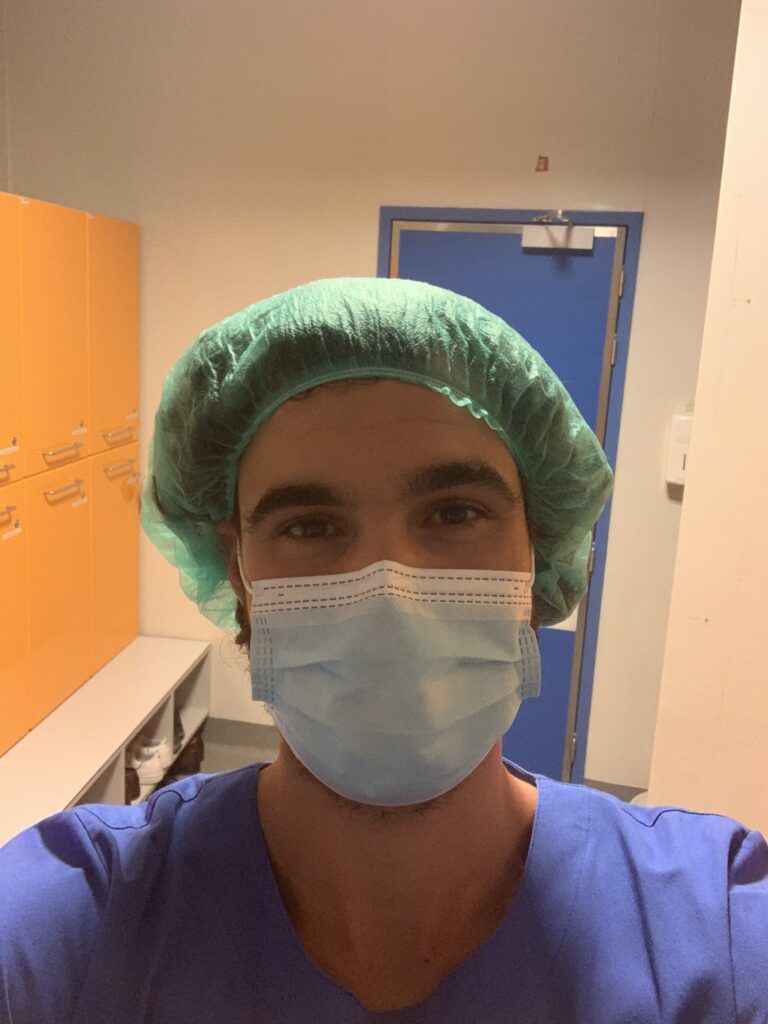
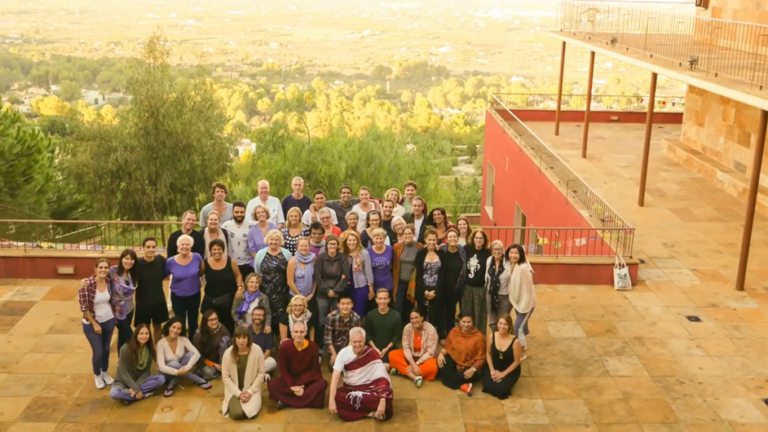
Here are some of my formal trainings and education. I give these less weight than the experiential foundation, but I know they matter to many of you, so here they are:
- Medical doctor, University of Porto
- Coach, and trainer of coaches through my Certification
- Certified Teacher of Cultivating Emotional Balance, trained under Dr. Eve Ekman and Dr. Alan Wallace
- Hypnotherapist, 500+ hours
- Trauma-trained
- Meditation teacher
- 10 years teaching, 250+ students
"Filipe's gifts for connection are truly extraordinary. At once he is a scientist and an angel. In all my training, I have rarely encountered a teacher as skillful as Filipe."

Where students feel it most
"I feel so much more present with my family. This has been a big shift. Just being with my kids and getting to know them again has been an enormous gift."

"I gained a deeper appreciation for and grace with myself knowing how my emotions were formed to keep me safe … This deeper knowledge of and friendship with all my parts so I am more regulated allow me to deal with my children from that point which they deserve – healed."
"Filipe's teachings and coaching opened up the possibility of learning to navigate the emotional world, both other people's and my own, with compassion and alignment. I reconnected with being 'the queen' of my inner world and learned how to guide it.
I had a lot of knowledge before finding this approach, but somehow things always went south… Now I can actually apply it, and my life is improving in every way!"

Join Befriend Your Emotions
Starts Thursday, Nov 19 · 3 weeks · live, online
Here's everything you get:
- 8 experiential lessons, full of practices and exercises, so you discover each idea in your own experience before it's taught. Two open every Tuesday and Friday.
- The Befriending practice in three versions (full, daily, and the Befriending Pause), with audio to download.
- 7 live sessions: the welcome call, 4 optional Live Work Sessions, the Implementation Call, and live group coaching with me.
- A course partner, if you'd like one, to do the work with at your own pace.
- The manual and workbook, to download and keep.
- Recordings of the live calls (the welcome call, the Implementation Call and the group coaching), to watch again or catch up on.
- A community of people doing the same work.
Hold your spot for $100
Too soon to decide? Hold your spot with a fully refundable $100 deposit, and pay the balance on Nov 16, just before we start.
Hold my spot for $100Limited-Number Bonus
For the first 10 people who join: a private 25-minute session with me, between Nov 21 and Dec 2, on wherever you get stuck in the practice. For reference, private work with me starts at $2,500. This one is my gift to you. If you're seeing this, at least one spot is still open.
6 of 10 left
"I learned how to handle emotions for the first time in my life, started to heal my own emotional wounds, completely changed my professional trajectory, supported someone who really needed it in the last three months of his life, had the most beautiful and joyful epiphany about how lucky I am to be who I am, and realized that just maybe my professional goals might be more of a calling than a job.
Honestly, I'm not sure anyone will buy it. Seems a bit overstated. Probably fake. ;)"
Do the first two weeks, then decide
If you've done lessons 1 to 4, logged at least three practices in your workbook, and the course isn't for you, write to me by Sunday, Nov 29, and you'll get a full refund.
Why the conditions? Because the first week is often the hardest (Owen told you about it), and I'd love for you to reach the first real shift before you decide. See if it's true for you. If you've done the work and it isn't, you'll get every cent back.
- Nov 19The course starts
- Lessons 1–4Done, with three practices logged
- Nov 29Write to me by Sunday
Private · 3 spotsSold out
For those who want the most from this work
If you're like the people who choose to work with me privately, you've already invested a lot in yourself. And you know where the biggest shifts came from: the moments when someone worked with you directly, on your own material.
Maybe a lot also rests on you: a business or a team, a family, people who count on you. When one emotion changes in you, it changes how you show up for all of them.
If you want everything this work can give you, as directly as possible, I invite you to apply for Private. You get everything above, plus:
- Three private sessions with me, 45 minutes each, one every week. We work directly with the emotion you're befriending, and with whatever it brings up in your life.
- Direct access to me between sessions. When something comes up during the three weeks, message me and I'll reply myself.
Only three spots available, by application only. Have a question first? Write to me at [email protected].
All three private spots are taken for this round. If you'd like to work with me privately, write to me at [email protected].
Questions you might have
How is this different from everything I've already done?
Most approaches work on or around the emotion itself: they help you calm it, release it, reframe it, or understand where it came from. That's useful, and many of our students arrive with years of it. This course works on something underneath all of them: your relationship with the emotion. Every one of those tools runs through that relationship, so when it changes, the tools you already have often start working differently. Sarah, a breathwork coach, put it like this: "I've done many courses before this one, but the way it is structured helped much of the knowledge I already had finally fall into place." And Constança, a certification graduate, said: "I had a lot of knowledge before finding this approach, but somehow things always went south… Now I can actually apply it."
I've done years of inner work. Isn't befriending a bit basic?
If you're like our most successful students, you've probably done more inner work than almost anyone you know. What many of them discover is that all of it was running through a relationship with their emotions that nobody had ever looked at directly. Because they'd already done so much, things finally clicked. So your background is an advantage rather than a drawback.
I've done parts work (IFS or similar). Will this overlap?
Some of it will feel familiar, and that's good: you'll use what you know. The difference is that this works with emotions directly, as the root, through one practice you come back to until it becomes how you meet yourself. Sarah had already met her exiled parts and protectors with her therapist. In her words, "this is the first time it feels natural instead of uncomfortable."
How much time will it take?
Plan for about 4 hours a week. That's four lessons, a short daily practice (15 to 20 minutes, daily or every other day), and whichever live sessions you join. The first lessons take the longest, because they include the full practice.
What if I can't make the live sessions, or I'm in another time zone?
You won't miss any content. The welcome call, the Implementation Call and the group coaching are all recorded, so you can watch them whenever suits you. (The pair practice inside the Implementation Call stays private, so that part isn't recorded.) The Live Work Sessions are where we go through the pre-recorded lessons together, and they're optional: you can do the same work with a course partner at a time that suits you both, or fully at your own pace. Live sessions are at 7pm CET, which is early afternoon in New York and morning in California. The page shows your local time.
Will I get time with you personally?
If you mean one-on-one, that's the private version of the course: three private sessions with me and direct access between them, for three people only. In the group version, the first 10 people who join get a private 25-minute session with me. Live, you'll be with me at the welcome call and at the group coaching on Dec 8. The coaching is where I coach, and you're welcome to raise your hand. I can't promise to coach everyone, and you'll probably find that watching someone else get coached moves things in you too.
How do I know I'll be safe feeling my emotions?
Safety is where everything in this course starts, and it's built into every step. Every practice begins by finding a safe place inside you, and you can come back to it whenever you need. You go at your own pace, and nothing is ever forced: the practice only asks for a willingness to listen, and nothing has to come. The lessons build gradually, so you get to know your emotion before going deeper with it. And the community is held by a few simple agreements that make it safe to be real. As a doctor and a trauma-trained teacher, I designed it this way on purpose. Emotions open up when they feel safe, so safety is part of how the change happens.
What if I do the practice and nothing happens?
Then you'll be in good company. Many of our students have sat down to a practice, closed their eyes, and found nothing. Some fell asleep. Some watched it all from the outside while everyone else seemed to be having a breakthrough. Most of the time that's a part of you being careful, and that part is exactly who we're here to befriend. That's why the practice only asks for a willingness to listen, and nothing has to come. It's also why the guarantee runs to the end of week two: so you can get through the first, hardest stretch before you decide.
Is this therapy?
No. It's an experiential course: you learn and practice a way of relating to your emotions. As a medical doctor, I'll say it plainly: it isn't treatment, and it doesn't replace it. Many of our students are in therapy or have been, and they often find the two support each other. Many have even told me it gave them an understanding and a transformation that years of therapy hadn't.
I work with clients. Will this help my work?
You'll probably feel it in your sessions, because how you meet your own emotions shows up in the room. This is your own work, though. It isn't a certification, and it's not meant to teach you how to use the method with clients. That's a separate training, which you can apply for only after joining this one.
How does the deposit work?
While it's open, you can hold your spot with $100. It's fully refundable until we start. The balance ($397, or three payments of $164) is charged on Nov 16, just before the welcome call.
How long do I keep access?
The manual, workbook and practice audios are yours to download and keep. The lessons and the call recordings stay online for at least a year.
Can my employer or business pay for it?
Often, yes. Many people use a professional development or wellbeing budget, or pay through their own business. Write to me and I'll send you an invoice, plus a short letter for your manager if you need one.
I've studied with you before. Is there anything for me?
Yes, quite a lot. Some ideas will feel familiar, and this course goes much further with them. It's rebuilt around one practice that you take deeper every week, alongside a group doing the same work, with live coaching at the end. Knowing the ideas and living them for three weeks are two different things. And as a past student, you can join at a special price. Write to me and I'll send you your private link.
Let me share with you why this feels so meaningful to me.
If you've been on this path for years, you've probably made peace with a lot. And maybe, somewhere along the way, you also made peace with the one thing that hasn't moved. Decided it's just how you are. Or that you'll get to it one day, when there's time.
There's an emotion in you that has been trying to help you for a very long time. Somewhere along the way it got stuck in a strategy that hurts you, and all the years of fighting it have only hardened it. When the fight ends, it can finally find a better way to help.
I'd love to offer you a new path with it. One where you work with your emotions, and they start working with you.
You don't have to be sure. Part of you is probably curious, and another part is probably wary. (It's been here before, and it has good reasons.) You don't need to get rid of the wary part to say yes. Bring it along. Let it sit in the passenger seat, seatbelt on, and let the curious part drive.
I'd be so happy to welcome you inside. I'll give it everything I have. All I ask is that you do the same.

With love,
Filipe
P.S. Remember, you can do the first two weeks and then decide. If you've done the work and it isn't for you, you'll get every cent back. And if you have a question this page didn't answer, write to me at [email protected]. I read and reply to every message myself.